Correct Answer

verified
Addition to methylenecyclohexane is more...View Answer
Correct Answer
verified
View Answer
A) I
B) II
C) III
D) IV
E) II and IV
G) B) and E)
Correct Answer
verified
Correct Answer
verified
Correct Answer
verified
Correct Answer
verified
Correct Answer
verified
Correct Answer
verified
A) 5-methyl-1-hexene
B) 4-methyl-1-hexene
C) (E) -5-methyl-2-hexene
D) (E) -2-methyl-3-hexene
E) 2-methyl-2-hexene
G) C) and D)
Correct Answer
verified
Correct Answer
verified
Correct Answer
verified
Correct Answer
verified
Correct Answer
verified
Correct Answer
verified
Correct Answer
verified
Correct Answer
verified
Correct Answer
verified
Correct Answer
verified
A) 1-chloropentane
B) 2-chloropentane
C) 1,1-dichloropentane
D) 2,2-dichloropentane
E) 1,2-dichloropentane
G) All of the above
Correct Answer
verified
Correct Answer
verified
Correct Answer
verified
Correct Answer
verified
Correct Answer
verified
Correct Answer
verified
Correct Answer
verified
Correct Answer
verified
Correct Answer
verified
Correct Answer
verified
A) 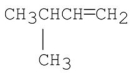
B) 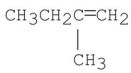
C) 
D) 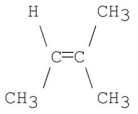
E) 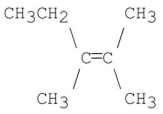
G) A) and B)
Correct Answer
verified
Correct Answer
verified
Correct Answer
verified
Correct Answer
verified
A) constitutional isomers.
B) identical compounds.
C) enantiomers.
D) diastereomers.
E) meso compounds.
G) C) and D)
Correct Answer
verified
Correct Answer
verified
A) a halonium ion
B) the most stable carbocation with OH on the adjacent carbon
C) the most stable carbocation with X on the adjacent carbon
D) a cyclic oxonium ion
E) the most stable carbanion
G) B) and E)
Correct Answer
verified
Correct Answer
verified
A) The addition of the electrophile is a slow step.
B) The addition of the nucleophile is a fast step.
C) A carbocation is formed as an intermediate.
D) Water abstracts the extra proton from the protonated alcohol.
E) all of the above
G) A) and E)
Correct Answer
verified
Correct Answer
verified
Correct Answer
verified
Correct Answer
verified
Showing 21 - 40 of 89
Related Exams